Origins of the Dragon Dance
The dragon dance is one of the oldest and most spectacular traditions in Chinese culture, with roots that extend back over two thousand years. According to historical records, the practice originated during the Han Dynasty as a ritual to summon rain during times of drought. Given the dragon's association with water and weather in Chinese mythology, it was natural for farmers to invoke the dragon's power through dance and ceremony, hoping to persuade the celestial creature to send the rain their crops desperately needed. The earliest dragon dances were likely simple processions with rudimentary dragon figures, but over the centuries the tradition evolved into the elaborate and acrobatic performance we know today.
The connection between the dragon dance and rain-making was not merely symbolic. In ancient Chinese agricultural society, the timely arrival of rain was literally a matter of life and death, and the dragon dance was one of the most important rituals for ensuring the community's survival. The dance was typically performed by young men from the village, who would carry the dragon through the fields and streets, accompanied by drums, gongs, and firecrackers. The loud noises were intended to awaken the celestial dragon and draw its attention to the community's need for rain. This combination of physical performance, musical accompaniment, and communal participation created a powerful ritual that served both practical and social functions.
The Dragon Puppet
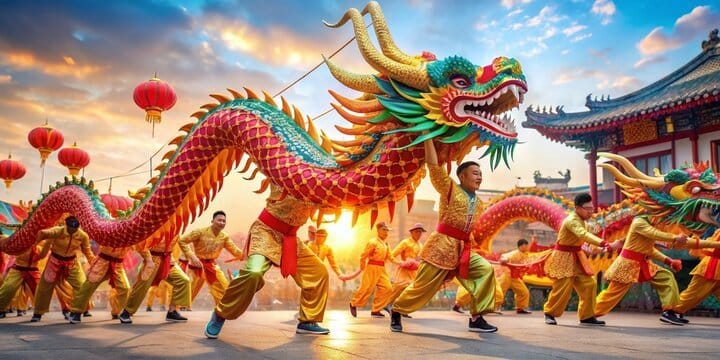
The dragon puppet used in the dance is a marvel of traditional craftsmanship. A typical performance dragon is between 30 and 50 meters long, though some can be over 100 meters, and is constructed from bamboo hoops covered with brightly colored fabric. The head is the most elaborate part, often featuring articulated jaws, glowing eyes, and a magnificent beard of fabric streamers. The body is made up of multiple segments connected by flexible joints, allowing the dragon to twist, turn, and undulate with remarkable fluidity. Each segment is mounted on a pole that is carried by a performer, and a typical dragon requires between nine and fifty performers to operate.
The colors of the dragon carry symbolic meaning. Green dragons represent the earth and the spring, and are associated with great harvests. Red or gold dragons represent fire and the summer, and symbolize excitement and good fortune. Blue dragons are associated with the sky and the east, and represent the beginning of all things. Silver or white dragons represent the moon and the autumn, and symbolize mourning and purity. The choice of color depends on the occasion and the preferences of the performing group, but each color carries its own cultural significance and associations.
The Performance
A dragon dance performance is a breathtaking display of coordination, strength, and artistry. The lead performer, who controls the dragon's head, is the most skilled member of the team, responsible for setting the pace and direction of the dance. The other performers must follow the head's movements precisely, creating the illusion of a single, living creature flowing through the streets. The dragon swoops and dives, circles and spirals, chases a pearl of wisdom held on a pole by a performer in front, and weaves through the crowd with a sinuous grace that belies the effort required to sustain the performance.
Accompanying the dragon is a team of musicians who play drums, gongs, and cymbals in a driving, rhythmic pattern that guides the pace of the dance. The music builds in intensity as the dance reaches its climax, with the dragon performing increasingly complex maneuvers — threading through its own body, forming spirals and figure-eights, and rearing up on its hind sections to "fly" above the crowd. Firecrackers are often set off during the performance, adding noise, smoke, and excitement to the spectacle. The combination of visual drama, rhythmic music, and explosive sounds creates an immersive experience that captivates audiences and brings communities together in shared celebration.
Regional Variations
Different regions of China have developed their own distinctive styles of dragon dance, reflecting local traditions, materials, and cultural preferences. In southern China, particularly in Guangdong province, the dragon dance is often combined with martial arts, and the performers execute acrobatic leaps and poses while manipulating the dragon. In the city of Tongliang in Chongqing, the famous Tongliang Fire Dragon dance involves performers who spray molten iron into the air, creating spectacular cascades of sparks that rain down around the dragon. This dangerous and dramatic performance is said to originate from the ancient belief that fire could purify and renew the community.
In Zhanjiang, Guangdong, the unique Renlong, or "Human Dragon," is performed without any dragon puppet at all — the performers themselves form the body of the dragon by linking their arms and bodies together in a chain. In other regions, dragon dances are performed on stilts, on boats, or even underwater. Each variation reflects the ingenuity and creativity of local communities in adapting this ancient tradition to their own circumstances and resources. Despite these regional differences, all dragon dances share the same fundamental purpose — to invoke the dragon's power, bring good fortune to the community, and celebrate the cultural heritage that connects the present to the distant past.
A Global Tradition
Today, the dragon dance has spread far beyond China, becoming one of the most recognizable symbols of Chinese culture worldwide. Chinese communities in virtually every country perform dragon dances during the Lunar New Year and other important celebrations, bringing the tradition to audiences who may have no other connection to Chinese culture. In cities from San Francisco to Sydney, from London to Lima, the dragon dance serves as both a cultural bridge and a source of community pride, connecting Chinese diaspora communities to their ancestral homeland while sharing the beauty and excitement of Chinese tradition with the wider world. The dragon, it seems, is as adaptable as ever — continuing to bring people together and summon the spirit of celebration wherever it goes.