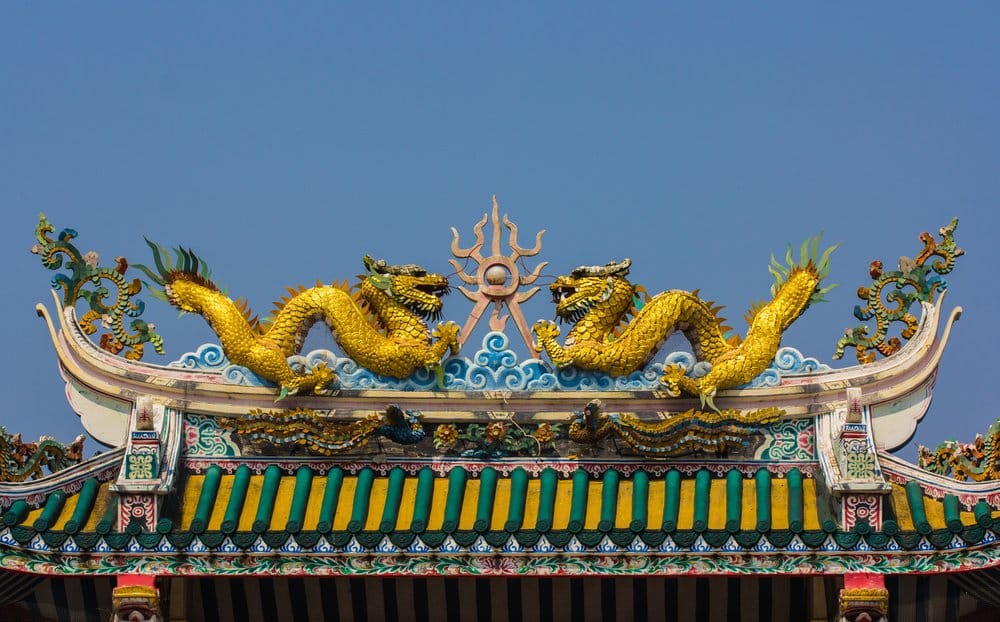
A Creature Unlike Any Other
The Chinese dragon, or long, is one of the most recognizable and revered symbols in all of Chinese culture, yet it is profoundly different from the dragons of Western mythology. While European dragons are typically portrayed as malevolent, fire-breathing beasts that hoard treasure and devour maidens, the Chinese dragon is a benevolent and auspicious creature associated with water, rain, and good fortune. The Chinese dragon does not breathe fire — it controls the weather. It does not hoard gold — it brings prosperity. It does not terrorize villages — it protects them. This fundamental difference reflects the profoundly different relationship that Chinese culture has with the natural world, one based on harmony and reverence rather than conquest and domination.
The physical appearance of the Chinese dragon reflects its composite nature. According to tradition, the dragon has the head of a camel, the horns of a deer, the eyes of a rabbit, the ears of a cow, the neck of a snake, the belly of a frog, the scales of a carp, the claws of a hawk, and the paws of a tiger. This remarkable amalgamation of animal features suggests that the dragon embodies the best qualities of many different creatures, making it the most powerful and perfect of all animals. The dragon's sinuous, serpentine body allows it to move through water and air with equal grace, and its ability to fly without wings — using the mystical power of qi rather than physical appendages — sets it apart from all other creatures, real or imagined.
Masters of Water and Weather
In Chinese mythology, dragons are primarily associated with water in all its forms — rain, rivers, lakes, oceans, and clouds. They are said to dwell in magnificent underwater palaces, where they govern the tides, control the rainfall, and manage the flow of rivers. The Dragon Kings of the Four Seas, who serve as the imperial administrators of the aquatic realm, are the most powerful of all dragons and are among the most important deities in the Chinese pantheon. Their ability to control rainfall makes them critically important to an agricultural civilization, and throughout Chinese history, communities have performed dragon dances and offered prayers to the Dragon Kings to ensure adequate rain for their crops.
Dragons are also associated with the weather in general, particularly with thunderstorms and typhoons. When a dragon rises from the sea to fly through the sky, it is said to create the clouds and wind that precede a storm. The dragon's roar becomes the thunder, and the water that clings to its scales becomes the rain. This association with storms gives the dragon a dual nature — it can bring the gentle rain that nourishes the crops, or it can unleash devastating floods that destroy everything in their path. This duality reflects the Chinese understanding that nature's power is neither inherently good nor evil but can manifest in beneficial or destructive ways depending on circumstances.
The Nine Sons of the Dragon
According to Chinese tradition, the dragon has nine sons, each with a distinct personality and appearance, and each associated with a different aspect of Chinese culture. Though they are dragons themselves, none of the nine sons resemble their father, and each has its own unique form and function. The first son, Bixi, resembles a giant tortoise and is often carved as the base of stone steles. The second son, Chiwen, looks like a fish and is placed on the roof ridges of buildings to ward off fire. The third son, Pulao, is fond of roaring and is used as the figure on bell handles.
The fourth son, Bi'an, resembles a tiger and is associated with justice, often placed at the entrance of courts. The fifth son, Taotie, is known for its love of food and appears on ritual bronze vessels. The sixth son, Gongfu, likes water and is carved on bridge piers. The seventh son, Yazi, is warlike and appears on sword handles. The eighth son, Suanni, resembles a lion and is associated with Buddhism, often placed on incense burners. The ninth son, Jiaoji, is the smallest and appears on prison doors. The diversity of the dragon's nine sons reflects the versatility and pervasiveness of dragon imagery in Chinese culture — there is virtually no aspect of Chinese life that does not have some connection to the dragon.
The Dragon and the Emperor
In imperial China, the dragon was the exclusive symbol of the emperor, who was believed to be the earthly incarnation of the celestial dragon. The emperor's throne was called the Dragon Throne, his robes were embroidered with dragons, and his face was referred to as the Dragon Face. Only the emperor was permitted to wear robes with five-clawed dragons; lesser nobles were restricted to four-clawed dragons, and officials to three-clawed ones. This appropriation of the dragon symbol by the imperial court reinforced the emperor's claim to divine authority and his unique position as the mediator between heaven and earth.
The association between the emperor and the dragon was not merely symbolic but was rooted in a deeper mythological connection. According to tradition, the Yellow Emperor, the legendary ancestor of the Chinese people, was said to have transformed into a dragon and ascended to heaven at the end of his life. This story established the dragon as a symbol of transformation and transcendence, suggesting that the emperor, like the Yellow Emperor before him, was capable of bridging the gap between the mortal and the divine. Even today, Chinese people around the world refer to themselves as "descendants of the dragon," a phrase that expresses both cultural pride and a deep spiritual connection to this most ancient and revered of mythological creatures.
Dragons in Modern China
The dragon remains one of the most important cultural symbols in modern China. Dragon dances are performed during the Spring Festival and other celebrations, with teams of performers manipulating long, colorful dragon puppets through the streets. Dragon boat racing, held during the Dragon Boat Festival, is a popular sport that combines athletic competition with cultural tradition. The dragon also appears on Chinese currency, in corporate logos, and in the iconography of the Chinese state. Despite the pressures of modernization and Westernization, the Chinese dragon has retained its power and relevance, adapting to new contexts while maintaining its essential character as a symbol of strength, wisdom, and good fortune.